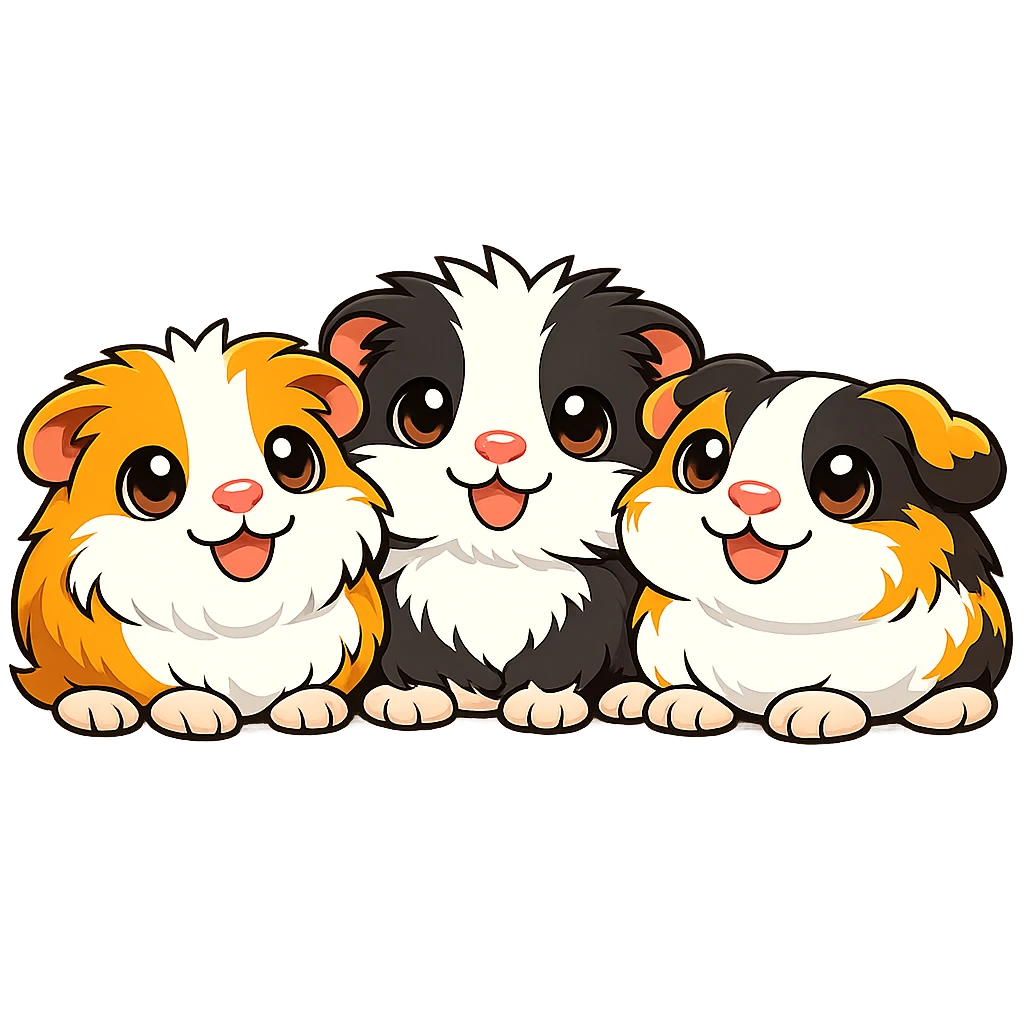
Guinea Pigs
Social charmers with big personalities
Guinea pigs are gentle, vocal pets that settle into predictable routines and often become more confident with steady care. They do best when you can support their social needs and keep their habitat clean and consistent.
At a glance
Basic requirements and commitment level
Daily requirements
Context & compatibility
Is this right for you?
Common scenarios where this pet tends to fit well or less well
A good match
- Are comfortable with regular cleaning and home upkeep
- Live in an apartment and want a generally calm pet
- Want a friendly presence with gentle interaction
- Enjoy pets that fit well into steady daily routines
Not ideal
- Travel often and want a pet that is easy to leave unattended
- Are sensitive to odors or frequent tidying
- Want strong, constant companionship like a dog or cat
- Prefer a very low-commitment daily routine
Daily life with this pet
What day-to-day routines typically look like
Housing & space
Guinea pigs often need more dedicated floor space than people expect, even though they’re small. A roomy, stable setup makes a noticeable difference in daily comfort.
Time & attention
They fit well into routine-based households—daily feeding, hay refills, and quick check-ins are part of the rhythm. They don’t need constant handling, but they do better when people are around regularly.
Travel & routine
They’re not a convenient “leave for the weekend” pet. Travel usually works best when they stay home and someone can keep food, hay, and cleaning on schedule.
Noise & disruption
Guinea pigs are famously vocal, especially around meals. It’s usually cheerful rather than disruptive, but in very quiet homes it can be more noticeable than expected.
Household fit
Guinea pigs can be a good family pet when expectations are calm and gentle. They do best in homes that can keep the habitat clean, dry, and predictable.
Care & health
Long-term routines and health considerations
Diet
Guinea pigs need constant access to hay, plus fresh vegetables and reliable vitamin C sources. A steady diet is one of the biggest factors in preventing common health issues.
Habitat & environment
They do best in roomy habitats with solid footing and safe bedding. Stable temperatures, good airflow, and a familiar setup help them stay calm and comfortable.
Enrichment & exercise
Hideouts, tunnels, and gentle floor time encourage natural exploration. Confidence tends to grow through routine and quiet repetition rather than big changes.
Cleaning
Frequent spot cleaning and regular bedding changes are part of daily life with guinea pigs. Keeping the habitat dry is one of the simplest ways to manage odor and support overall health.
Grooming
Needs vary by coat type, but regular checks are always useful. Nail trims and occasional brushing keep them comfortable and help prevent small problems from sneaking up.
Veterinary & preventive care
It’s worth identifying an exotics-capable vet early. Routine checks help catch dental wear, weight loss, or diet-related issues before they become harder to manage.
Common health concerns
Dental wear issues, vitamin C deficiency, and respiratory sensitivity are common themes. Changes in eating, droppings, or activity are often the earliest clues that something needs attention.
Background
Origins, domestication, and how that shapes modern behavior
Origins
Guinea pigs were domesticated in the Andes thousands of years ago and later introduced to Europe. You’ll also see them called a cavy, especially in breed contexts.
Domestication & relationship with humans
They were shaped as household animals in human communities, selected over time for calmer temperaments and a variety of coat types. Unlike many small mammals, they stayed strongly tied to human routines—food cues, sounds, and familiar schedules.
What that means today
Diet consistency—especially hay and vitamin C—and a clean, comfortable habitat are the core of guinea pig success. They’re often a great fit for people who want a small pet that’s awake during the day and responds to routine.
Varieties
Common varieties and how they look
American (Short Hair / Smooth)
A short, smooth coat that lies close to the body and shows color and markings clearly—this is the classic “standard” guinea pig look. Some listings add “satin” to mean the same coat type with extra sheen.
Abyssinian (Rosetted)
A textured coat made up of multiple rosettes—swirls that create a spiky, tousled look rather than a smooth finish. The hair grows in different directions, giving Abyssinians a distinctly ruffled silhouette.
Crested (White Crested)
A short, smooth coat with a single crest (rosette) centered on the forehead, creating a neat swirl right on the head. Aside from the crest, the body coat reads like an American—clean, close, and easy to recognize at a glance.
Teddy
A short but very dense, plush coat that looks rounded and “stuffed animal” soft, often standing slightly off the body. The outline reads thicker and puffier than a smooth coat, with a velvety finish.
Peruvian (Long Hair)
A very long coat that can drape dramatically and sometimes fall forward over the face, changing the guinea pig’s whole silhouette. The length and “curtain” effect are the defining features, often making Peruvians look like they’re wearing a cloak.
Silkie (Sheltie)
A long, flowing coat that sweeps backward from the head, usually keeping the face more visible than forward-falling long-hair types. The look is smooth and draped, with coat length and movement as the main signature.
Coronet
A long-haired guinea pig with a distinct crest on the forehead, combining a flowing coat with a visible head swirl. It reads like a crested long-hair—crest first, coat length second.
Texel
A long, curly coat with clear ringlets, giving a plush, springy look that’s very different from straight long hair. The curls add volume, so Texels often appear fuller and more cloud-like in outline.
Hairless (Skinny)
Mostly hairless, often with a little fuzz on the nose, feet, or around the joints, so skin texture and wrinkles become the main visual feature. With little coat for warmth or protection, Skinny guinea pigs usually need a bit more attention to temperature and skin comfort.
Social & behavior
How this pet typically relates to people and their environment
Temperament
Gentle, alert, and expressive — they often communicate through vocalizing and routine cues. Confidence is easy to spot: bold pigs come forward; shy pigs hover near cover until they feel safe.
Handling
Usually tolerate handling best when it’s calm and consistent; many prefer slow approaches and secure support. They often do better with short, frequent handling than long sessions.
Social structure
Social species — guinea pigs generally do best with at least one compatible companion and can become stressed when kept alone long-term. A stable social setup often shows up as more relaxed eating, more exploring, and less constant hiding.
Activity pattern
Active in short bursts throughout the day, often most animated around feeding and familiar sounds. Common surprise: they learn household cues fast—some will start “calling” the moment they hear a bag, fridge door, or footsteps.